
Munich Guide: 8 Must-See Highlights You’ll Love
Welcome to my Guide to Munich. I hope I can give you an insight of this truly magical city. I am sure you know Munich from the famous Oktoberfest celebration, which attracts millions of visitors from around the world each year. But Munich has much mor to offer than just that. I really enjoyd staying in Munich. The food is delcious, the architecture is Stunning and it has an amazing vibe to it. I am sure this guide will help you plan your trip and enjoy this city.

Best Time to visit Munich
My Munich trip was in May. Which normally is quite a good month for a city break. But Unfortunately not this weekend. We got pretty lucky that it didn’t rain but it was cloudy almost all weekend and very cold. We came prepared for the cold, so it didn’t bother us much.
But for your trip the best season to stay in Munich really depends on what you’re looking for. Here are some pros and cons of each season:
Summer (June to August):
Pros – Its warm and sunny weather that is perfect for outdoor activities. During this time there are many festival and events. You have longer daylight and get more time to explore.
Cons – Crowds are common, and both flight and accommodation prices tend to spike
Fall (September to November):
Pros – It turns into a beautiful fall mood with cooler weather and leaves in stunning colors. It also has fewer crowds than in summer and the prices are generally lower.
Cons – Shorter days with less daylight hours. The chance for rain or cloudy weather is higher.
Winter (December to February):
Pros – There are Magical Christmas markets. You can see snow-covered landscapes and you can do winter sports activities. In Winter you have fewer crowd expect on the Christmas market. The prices for accommodation and flights are low.
Cons – The weather can get really cold, so bring your winter coats, hat and scarf. The day is quite short but that could be a pro if you love the winter and Christmas lights. Some attractions and activities may close in bad weather.
Spring (March to May):
Pros – The temperatures are mild and there are blooming flowers and trees. You will have fewer crowds than in summer and the prices for accommodation and flights are lower.
Cons – the chances of rain or a cold day are quite high. Some attractions and activities may not yet be open for the season. Overall, each season has its own unique charm and advantages. If you’re looking for warm weather and festivals, summer is the best season to visit Munich. If you prefer cooler temperatures and lower prices, consider visiting in fall or spring. And if you’re looking for a winter wonderland experience with Christmas markets and winter sports activities, winter is the best season to visit Munich.

How long should you stay in Munich?
The ideal length of stay in Munich really depends on your interests and what you want to do. I stayed for 3 days. We planned a quick getaway—and that’s exactly what it turned out to be. I really recommend that you plan to stay at least 4 days. We got to see a lot of things but nearly not all top spots. Here are some factors to consider when deciding how long to stay:
Sightseeing: Munich has many interesting sights and attractions, such as museums, historic buildings, and beautiful parks. If you want to see as much as possible, you may want to stay for at least 3-4 days.
Festivals and Events: Munich bursts to life with events like Oktoberfest, the Christmas markets, and the Spring Festival. To fully enjoy one of these iconic celebrations, plan to stay at least a week.
Day Trips: Munich is also a great base for day trips to nearby attractions, such as Neuschwanstein Castle, Salzburg, or the Bavarian Alps. If you want to explore the region, plan to stay for at least a week.
Relaxation: If you want to take it easy and enjoy the city at a leisurely pace, you may want to stay for 3-4 days.
In summary, the ideal length of stay in Munich depends on what you want to do while you’re there. If you want to see as much as possible and experience some of the festivals and events, plan to stay for at least a week. If you want to take it easy and enjoy the city at a leisurely pace, 3-4 days may be sufficient. And if you want to explore the region and go on day trips, plan to stay for at least a week.
8 Must See things in Munich
Marienplatz:
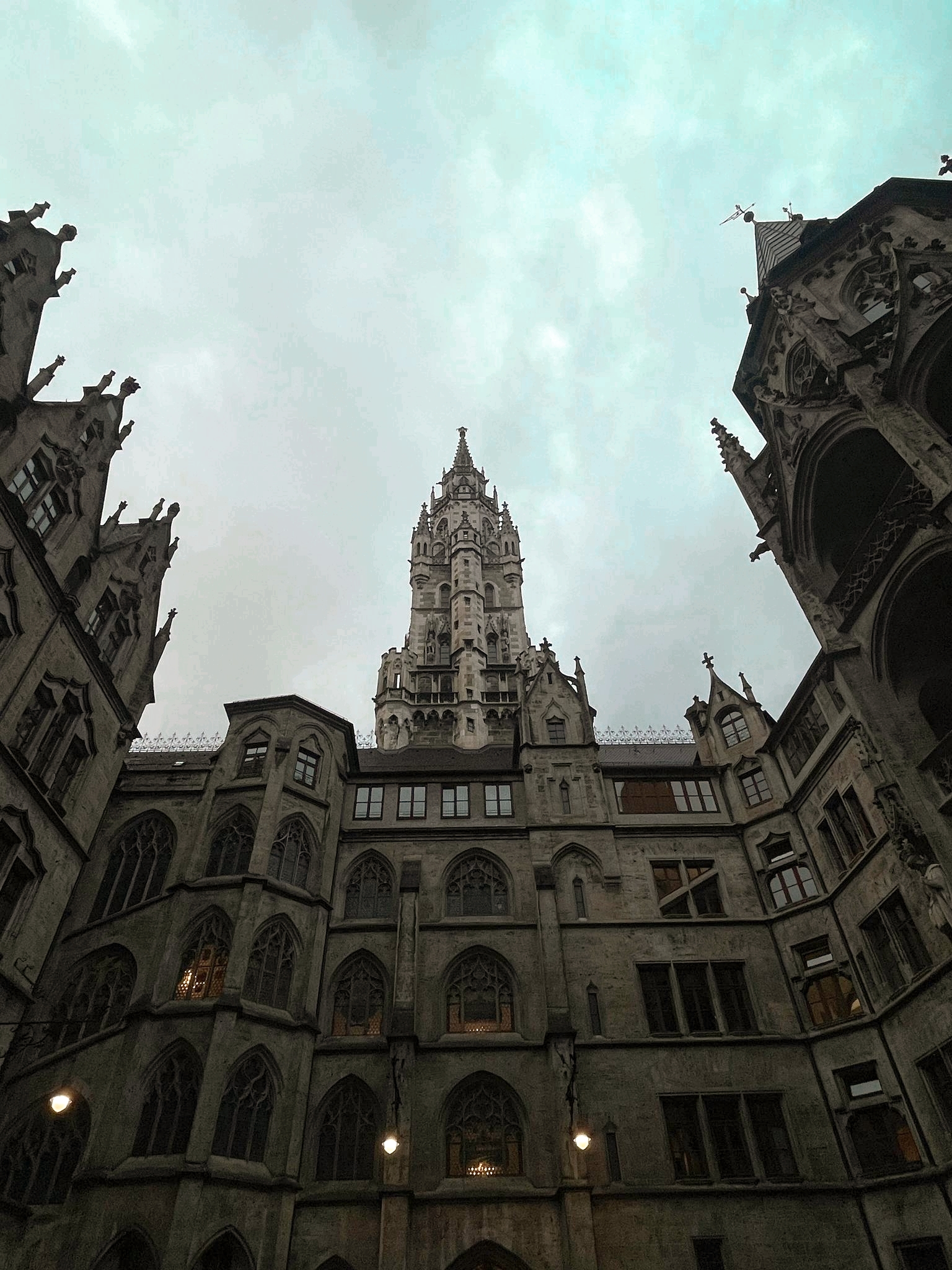
Marienplatz, located in the heart of Munich, is the city’s central square and a must-see attraction. Steeped in history since the 12th century, it’s known for its stunning architecture, vibrant atmosphere, and cultural significance. Whether you’re admiring the Neues Rathaus or catching the Glockenspiel show, Marienplatz is where Munich’s past and present come together.
Today, Marienplatz is a bustling hub of activity, surrounded by important buildings such as the New Town Hall (Neues Rathaus), which features the famous Glockenspiel. This clock tower puts on a show twice a day, where figurines reenact historical events from Munich’s past, accompanied by music.
Marienplatz is also home to many cafes, restaurants, and shops, making it a popular spot for tourists and locals alike to relax and enjoy the city’s vibrant atmosphere. The square is particularly lively during festivals and events, such as the annual Christmas Market and the Oktoberfest celebrations.

Englischer Garten:
It is one of the largest urban parks in the world and attracts millions of visitors each year. But it is also very popular for the locals. The park offers a variety of activities and attractions. It features numerous walking and cycling paths, as well as lakes, streams, and gardens that provide a peaceful retreat from the hustle and bustle of the city.
A standout feature of the park is the Chinese Tower (Chinesischer Turm), a 78-foot (25-meter) wooden pagoda-style tower built in 1789. Today, it hosts a lively traditional beer garden, making it a favorite spot for both locals and visitors. You can relax in the shade of the tower’s surrounding chestnut trees while enjoying a cold beer and traditional Bavarian food.
Other highlights of the Englischer Garten include the Japanese Tea House, the Monopteros, a small Greek-style temple offering panoramic views of the park, and the Kleinhesseloher Lake, where you can rent paddle boats and relax on the shore.
The Englischer Garten is a must-visit destination for anyone traveling to Munich and offers a unique and memorable experience for all who visit.
Hofbräuhaus:
The Hofbräuhaus, Munich’s world-famous beer hall, was founded in 1589 by Wilhelm V, Duke of Bavaria. It stands as a vibrant symbol of Bavarian culture and hospitality.
Step inside to experience a lively traditional atmosphere, where you can sample some of Munich’s best brews—including the iconic Hofbräuhaus beer, brewed on site for centuries. The massive beer hall seats up to 1,300 guests and is adorned with classic Bavarian murals and rustic furniture.
Beyond the beer, enjoy hearty Bavarian dishes like roast pork, sausages, sauerkraut, and giant pretzels served in generous portions. The Hofbräuhaus isn’t just about food and drink—it’s a cultural institution that has welcomed famous visitors like Mozart, Lenin, and JFK.
The festive vibe comes alive with regular live performances featuring traditional Bavarian music and dance. And if beer’s not your thing, don’t worry—they offer a selection of wines and non-alcoholic drinks too.

Nymphenburg Palace:
It is a stunning Baroque palace located in Munich, Germany. It was built in the late 17th century as a summer residence for the rulers of Bavaria and is now one of the city’s most popular tourist attractions.It features a number of impressive buildings, including the main palace, a carriage museum, and several pavilions and gardens. The palace itself is a stunning example of Baroque architecture, with beautiful decorations and gardens.
Inside the palace, you can explore a number of ornate rooms, including the Great Hall, the Throne Room, and the Gallery of Beauties, which features portraits of 36 beautiful women from Munich society painted by court artist Joseph Stieler.
The palace’s extensive gardens are also a major attraction, featuring formal parterres, fountains, and lakes, as well as a variety of smaller pavilions and buildings. One of the most popular garden features is the Amalienburg, a small hunting lodge that was built in the Rococo style and is considered a masterpiece of Bavarian Baroque architecture. In addition to its historical and architectural significance, Nymphenburg Palace also serves as a cultural center, hosting a variety of events and exhibitions throughout the year. You can attend concerts, theater performances, and art exhibitions, as well as explore the palace and gardens on guided tours.
BMW Museum:
The BMW Museum is a world-renowned museum dedicated to the history and evolution of the Bavarian Motor Works (BMW)
You can explore the history of BMW’s automobiles, motorcycles, and engines through interactive exhibits, displays, and multimedia installations. The museum features classic cars and motorcycles, as well as concept vehicles and prototypes, showcasing the brand’s engineering and design innovations over the years.
One of the my highlights of the museum where to oldtimer cars and the evlotion of BMW. The museum also offers guided tours and educational programs for visitors of all ages, making it a great destination for families and groups. Additionally, you can purchase BMW merchandise and souvenirs in the museum’s gift shop.
Overall, the BMW Museum is a must-visit destination for anyone interested in cars, design, and innovation. It offers a fascinating insight into the history and evolution of one of the world’s most iconic automotive brands.

Deutsches Museum:
The Deutsches Museum is a world-renowned museum, that is dedicated to science and technology. It is one of the largest and oldest science and technology museums in the world, with over 28,000 exhibited.It’s attracting over 1.5 million visitors annually. You get to explore a wide variety of exhibits and interactive displays that showcase the history and evolution of science and technology. Some of the most popular exhibits include the aerospace collection, which features full-scale models of rockets and spacecraft, and the power plant exhibit, which demonstrates how energy is generated and distributed.
The museum also has a large collection of historic musical instruments, a planetarium, and a large research library. Additionally, the museum offers a range of educational programs, including guided tours, workshops, and lectures, making it a popular destination for school groups and families.
Olympiapark:
The Olympiapark is a large complex that was built for the 1972 Summer Olympics. It is one of the most popular tourist attractions in the city and offers a wide range of activities and events throughout the year.
The centerpiece of Olympiapark is the Olympic Stadium, which features a unique tent-like roof structure. The stadium has a capacity of over 69,000 people and has hosted a wide range of events over the years, including concerts, sports events, and cultural festivals.
One of the most popular attractions in Olympiapark is the Olympic Tower, which offers stunning views of the city from its observation deck. You can take an elevator to the top of the tower, which stands at over 290 meters tall, and enjoy panoramic views of Munich and the surrounding area.
Other attractions in Olympiapark include the Olympic Village, which was built to house athletes during the 1972 Olympics and now serves as a residential community, and the Olympic Lake, which offers a variety of water sports and recreational activities.
The park is easily accessible by public transportation.

Viktualienmarkt:
It is a popular open-air food market. The market has been in operation since the early 19th century and has become a beloved institution in the city, attracting both locals and tourists
offers a wide range of fresh produce, meats, cheeses, baked goods, and other specialty foods, as well as flowers, crafts, and souvenirs. You can wander through the colorful stalls and sample a variety of local and international foods, including Bavarian sausages, cheeses, and pastries.
Food and Drinks
Munich is known for its delicious food and drink, with a strong emphasis on traditional Bavarian cuisine. Here are some of the must-try foods and drinks in Munich:
- Weisswurst: A traditional Bavarian breakfast sausage made from veal and pork, flavored with parsley, lemon, and cardamom.
- Brezen: A large, soft pretzel, often eaten as a snack or with a beer.
- Schweinshaxe: A roasted pork knuckle, served with sauerkraut and potatoes.
- Schnitzel: A breaded and fried cutlet of veal or pork, served with potatoes or a side salad.
- Spätzle: A soft egg noodle similar to Italian pasta, often served with a creamy mushroom sauce.
- Bier: Munich is famous for its beer, especially the traditional Bavarian beer styles like Helles, Dunkel, and Weissbier.
- Glühwein: A warm, spiced wine that is popular during the Christmas markets in winter.
- Apfelstrudel: A classic Austrian dessert made with layers of paper-thin pastry filled with apples, cinnamon, and raisins.
- Leberkäse: A type of meatloaf made from beef and pork, served in slices as a snack or in a sandwich.
- Kaiserschmarrn: A sweet dessert made with shredded pancakes, raisins, and applesauce.
In addition to the traditional Bavarian cuisine, Munich also has a diverse culinary scene with many international restaurants and cafes. Whether you’re looking for traditional Bavarian food or international cuisine, Munich has plenty of delicious options to choose from.
If you are looking for a good bavarian restaurant, I highly recommend the Ratskeller at the Marienplatz. It’s has a lot of different traditional meals to choose from and it was just too delicious.

Ready to Discover Munich?
This was a Guide to Munich and 8 Must-See Things, If you’re planning a trip, I hope this has given you a taste of what this amazing city has to offer. You you take a trip to this magical city please share you experiences with us
If you want to know more about other citys in Europa have a look here