
How to Eat Like a Local in Southeast Asia Without Getting Sick
I am a true foodie and food lover. I love to experience different spices and taste explosions around the world. And I especially love to eat Asian food and Asia is a food lover’s dream with its night markets and what feels like endless choices. But I think we all heard horror stories involving said food and markets. But I think food is a big part of a culture and by missing out on those taste experiences your travel just lacks the depth of a country. So let e give you me personal rules when it comes to eating at Market in general not just I Asia. And honestly, I have not been sick yet, so they seem to work. I have a Post about everything you need to eat if you are in Hanoi if you want to check it out.
General Principles
Eat Where the Locals Eat
Generally, a busy stall with a line of locals is a good sign. A high turnover means fresher ingredients. Avoid deserted vendors if the food looks like it’s been sitting out for a while. If something from a vendor without a line looks good or you are unsure about a stall, you can observe it for a while maybe this will clear things up.

Mind the Produce
Peel it is also one part of the saying I told you before. Eat fruits you peel yourself (bananas, mangos, rambutans) and avoid pre-cut fruit or raw salads unless you’re sure they’ve been washed in clean water.
Watch It Cook before you eat
Most of the time you will catch me watching a stall from a distance to watch it cook. I try to find stalls that cook fresh food preferably to order in front of you.
I bet you have heard the phase “cook it, peel it or leave it”? That saying really is your rule and not just a phrase. High heat kills most pathogens. Grilled, boiled, or stir-fried dishes are generally safer than raw or lukewarm foods. If the food is fried look at how old the oil looks. If it looks good, it is safe to go.

Dairy and Cold Foods
Dairy isn’t common in much of Southeast Asia, but when it appears, make sure it’s pasteurized and kept cold.
Be wary of desserts with ice, cream, or coconut milk that’s been sitting out. Here I would also stick to looking to see if the stall has a high turnover and locals that buy from there.
Be Cautious with Water
Always buy bottled water in Asia. I try to find a nearby supermarket and buy in a big chuck that I can fill my reusable water bottle. If it’s not bottled only by drinking sealed water or water, you purify yourself with a Filter bottle like this.
Ask to get your drink without ice unless you know it’s made from filtered water (in many big cities, it usually is).
When you are staying in a rural area use bottled water to brush your teeth.

Country-by-Country Quick Tips
Thailand
- Stick to dishes cooked to order: pad thai, som tam (made fresh), curries at busy stalls.
- Ice is generally safe in urban areas (it’s commercially made).
- Avoid raw seafood at night markets unless you’re near the coast and it’s very fresh.
Vietnam
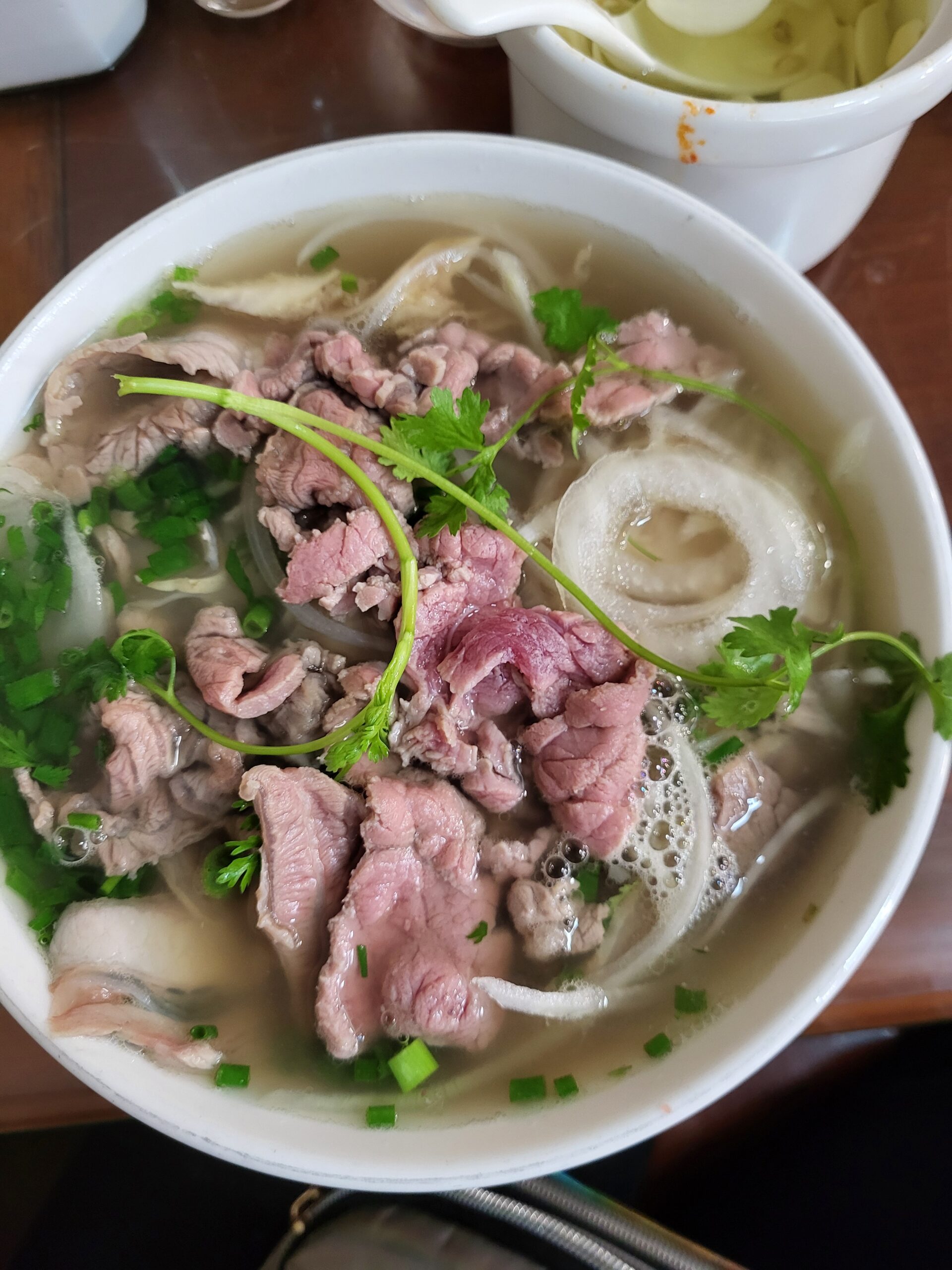
- Pho and bun cha from busy morning spots are great bets.
- Avoid pre-washed herbs if you have a sensitive stomach — or rinse them yourself in bottled water.
- Coffee with condensed milk is fine — the milk is shelf-stable and safe.

Indonesia
- Stick to warungs (local eateries) with fast turnover.
- Satay (grilled skewers) and nasi goreng (fried rice) are safe bets.
- Avoid sambal or sauces left unrefrigerated on tables for long periods.
Malaysia & Singapore
- Hawker centres are generally very clean, especially in Singapore.
- You can safely enjoy laksa, chicken rice, and roti canai from busy stalls.
- In Malaysia’s smaller towns, apply the “busy stall” rule more carefully.
Bonus Tips to eat save
- Probiotics: Taking them before and during your trip can help build gut resilience.
- Hand hygiene: Wash hands often or use sanitizer before eating.
- Start slow: Give your body a day or two to adjust before diving into adventurous street food.
- Trust your nose and instincts: If it smells off or looks unclean, skip it.
- Bring a stomach aid: Something like Pepto-Bismol, activated charcoal, or rehydration salts can help if you do get mild symptoms.
In general, I would say listen to your gut. When a stall is busy, you watch them cook and you are still unsure then leave it. The same goes for a night market stall that Mabey not as busy at that time but it feels and lock clean. What is your opinion on Market foods, or have you any good stories or recommendations let me know in the comments!
If you are interested to learn more about Asia here I have some Blogpost for you.
Leave a Reply