
The ultimate Guide to London with 8 must see places
Welcome to my Guide to London and the 8 Must See Things. So Frist things First I let you in a little secret of mine. I am in Love with London. It was my first ever city trip when I was 16 an this trip was the reason why I fell in love with travelling and especially with London, Since then if you don’t count the Covid years I visit London almost every year. So I can definitely say that this is a trip that you have to take.
Best Time to visit London?
I went to London in different seasons, but most of the time I visited London in June. I think that this is a perfect month. The chances are very high that the weather is good and its not to crowded. Although the colder months also have their charm. One thing that is definitely on my list is to visit in December with all the Christmas Lights up. Btw. A little tip on the side. Plan your trip from Saturday to Monday or Tuesday. The flights are much cheaper and on Monday/Tuesday you have very less tourists and you can explore the attractions with a fewer crowd.
Here is a breakdown of the seasons to help you decide when to go
Spring (March to May):
Spring in London brings milder temperatures and blooming flowers. It’s a great time to explore the city’s parks, such as Hyde Park and Kensington Gardens. Additionally, you can enjoy cultural events like the Chelsea Flower Show and various music festivals.
Summer (June to August):
Summer in London is generally warm, although rainfall is still possible. The city comes alive with outdoor activities, including open-air concerts, festivals, and Wimbledon (tennis tournament). The days are longer, allowing you to make the most of your sightseeing and enjoy attractions like the Tower of London and the Buckingham Palace.
Autumn (September to November):
Autumn brings cooler temperatures and beautiful fall foliage. This season is less crowded than summer, and you can experience events like the London Fashion Week and the NFL London Games. It’s a good time for museum visits and exploring the city’s historical landmarks.
Winter (December to February):
Winter in London may be chilly, but it’s a magical season to explore the city. Stroll beneath sparkling Christmas lights, glide across outdoor ice rinks like Somerset House, and ring in the New Year with the spectacular fireworks over the River Thames.

How long should you stay?
I always stay 3 to 4 days. I think for me that is the perfect length. But the duration of your stay in London depends on several factors, including your interests, the purpose of your visit, and the amount of time you have available. London is a city with numerous attractions and activities, so I recommended to stay for at least a few days to get a taste of what the city has to offer. Here are some guidelines to consider:
Weekend Getaway: If you have limited time, a weekend trip to London can still be worth it. Plan for a minimum of two to three days to explore the major landmarks, such as the Tower of London, Buckingham Palace, the British Museum, and take a stroll along the Thames.
Short Visit: For a more comprehensive experience, consider staying for four to five days. This duration will allow you to visit additional attractions, such as the London Eye, the Houses of Parliament, St. Paul’s Cathedral, and take in the vibrant atmosphere of neighborhoods like Covent Garden or Camden Town.
Extended Stay: If you have more time available, you can extend your stay to a week or even more. This will allow you to dive deeper into the city’s offerings, explore its diverse neighborhoods, visit lesser-known museums and galleries, take day trips to nearby destinations like Windsor Castle or Oxford, and immerse yourself in the local culture
8 Must See things in London
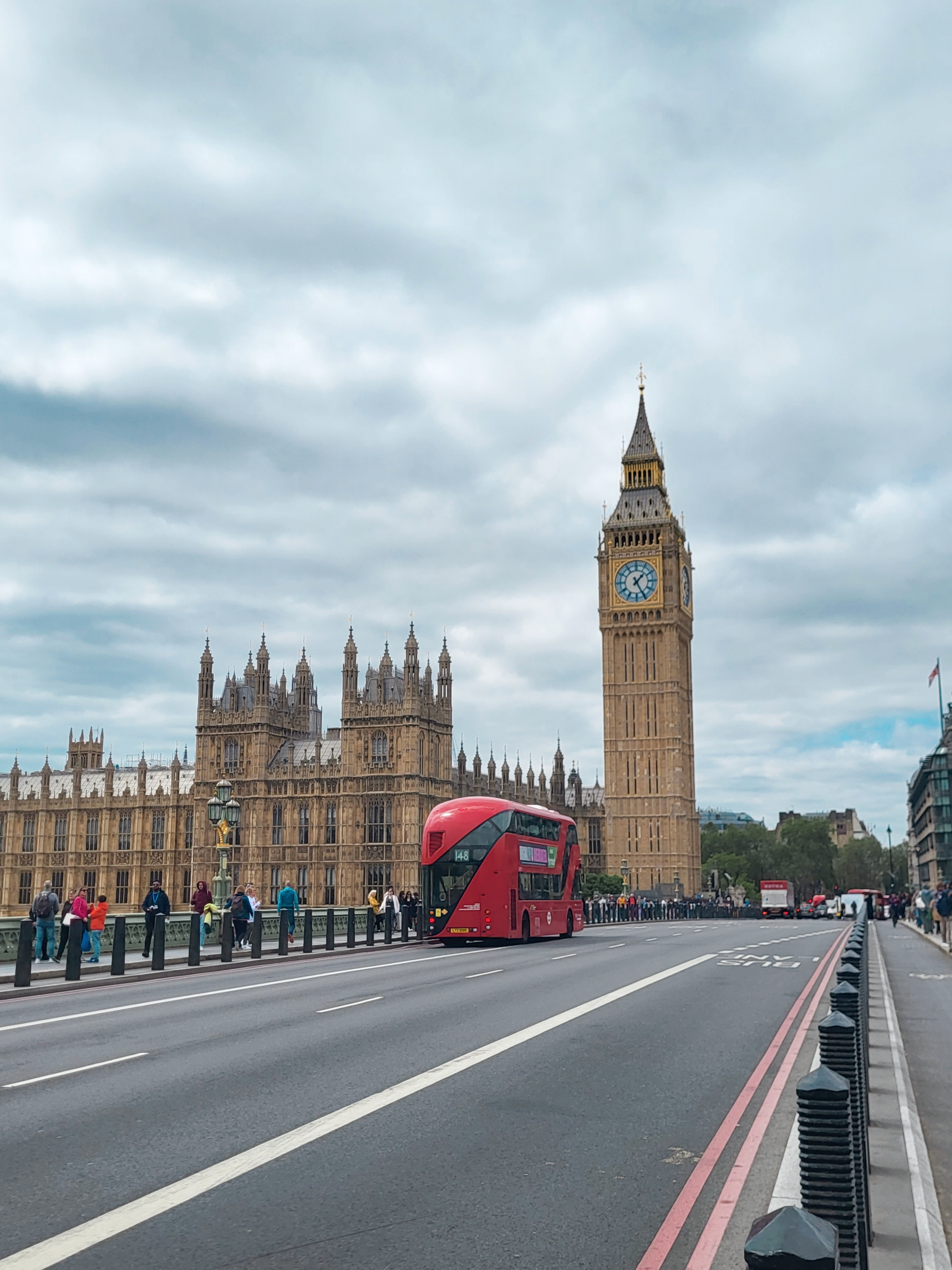
Big Ben & House of Parliament
Big Ben, one of London’s most iconic landmarks, stands proudly at the north end of the Palace of Westminster. While many use the name to refer to the clock tower, Big Ben is actually the nickname for the Great Bell inside. The tower itself is officially called the Elizabeth Tower, named in honor of Queen Elizabeth II.
Access to the Elizabeth Tower, including the clock mechanism and the Great Bell, is not generally open to the public. However, visitors can still view the tower from the outside and take photographs.
The Houses of Parliament, officially known as the Palace of Westminster, is the iconic building in London where the UK Parliament conducts its business. The Palace of Westminster is an impressive example of Gothic Revival architecture and is located on the banks of the River Thames.
The Palace offers guided tours, you get the opportunity to explore the historic building and learn about its rich history and the work of Parliament. These tours typically include visits to significant areas such as the Central Lobby, the Queen’s Robing Room, and the Westminster Hall. Tour availability may change due to parliamentary sessions, so be sure to check the official website for the latest updates and booking information.

Buckingham Palace
Buckingham Palace is the official residence and administrative headquarters of the reigning monarch of the United Kingdom. It is located in the City of Westminster.
The Buckingham Palace has been the official residence of the British monarch since 1837 when Queen Victoria took up residence. It serves as both a private home for the royal family and a setting for state occasions and official events.
One of the most popular attractions at Buckingham Palace is the Changing of the Guard ceremony. This traditional ceremony takes place in the forecourt of the palace and involves the changing of the guard to the accompaniment of military music. It is a colorful and ceremonial display that draws many visitors. However, it’s important to note that the ceremony is subject to schedule changes and cancellations, so it’s advisable to check the official website or local sources for the most up-to-date information before planning your visit.
Hyde Park
Hyde Park is one of the largest and most famous parks, known for its expansive green spaces,
recreational activities, and cultural events, It offers vast open spaces, making it a popular destination for outdoor activities and relaxation. The park features lush lawns, tree-lined pathways, and beautiful flower beds. It’s a great place for picnics, leisurely walks, jogging, cycling, or simply enjoying the tranquil atmosphere.
The Park is home to the Serpentine, a large recreational lake that bisects the park. Visitors can rent rowing boats or pedalos to enjoy a leisurely ride on the water.
It is also famous for its Speaker’s Corner, where individuals can freely express their views on a wide range of topics. It’s a traditional site for public speeches, debates, and discussions, dating back to the mid-19th century. You can join in or observe the lively debates that take place here on weekends
Hyde Park is home to several memorials and monuments that hold historical and cultural significance. The most notable among them are the Diana, Princess of Wales Memorial Fountain, the Holocaust Memorial, the Joy of Life fountain, and the Achilles Statue
Tower Bridge
Tower Bridge, an iconic symbol of London, spans the River Thames near the historic Tower of London. Designed by Sir Horace Jones and completed in 1894, this striking structure combines bascule and suspension bridge designs. Its two towering structures are linked by a high-level walkway, offering stunning views of the city. Built to handle both road and pedestrian traffic, the bridge also accommodates river traffic thanks to its unique bascule mechanism. The two massive bascules lift to let tall ships pass through—an impressive sight and a testament to Victorian engineering.

Westminster Abbey
Westminster Abbey is a historic and iconic church located in the City of Westminster. It has a rich history dating back over a thousand years. The abbey was originally founded as a Benedictine monastery in the 10th century and has since become renowned for hosting royal coronations, including the coronation of Queen Elizabeth II in 1953.
It has also been the venue for numerous royal weddings, such as the wedding of Prince William and Catherine Middleton (Duke and Duchess of Cambridge) in 2011. The abbey’s rich history and association with the monarchy make it a symbol of the British monarchy and its traditions. But it is also the burial place of many British monarchs, including Queen Elizabeth I, Mary I, and Mary, Queen of Scots.
Oxford Street
Oxford Street is one of the most famous and bustling shopping destinations in London,. It stretches for approximately 1.9 kilometers (1.2 miles) from Tottenham Court Road in the east to Marble Arch in the west.
Oxford Street is renowned for its extensive range of shops, department stores, boutiques, and flagship stores of major international brands. It attracts millions of visitors each year, both locals and tourists, who come to shop, explore the various retail options, and experience the vibrant atmosphere.
Some of the notable stores on Oxford Street include Selfridges, one of the largest and most well-known department stores in London, as well as other prominent retailers such as Zara, H&M, Topshop, Nike, Primark, and many more. You can find a wide variety of fashion, accessories, electronics, beauty products, and homeware among the numerous stores.
London Eye
The London Eye, also known as the Millennium Wheel, is a famous landmark and a popular tourist attraction. It is a giant Ferris wheel located on the South Bank of the River Thames, near the Jubilee Gardens and opposite the Houses of Parliament
The London Eye was officially opened in March 2000 and quickly became an iconic symbol of the city. It stands at a height of 135 meters (443 feet) and offers breathtaking panoramic views of London’s skyline. Each glass capsule on the wheel can hold up to 25 people, and a full rotation takes approximately 30 minutes, providing enough time to enjoy the stunning views.
Visiting the London Eye allows you to see famous landmarks such as Big Ben, the Houses of Parliament, St. Paul’s Cathedral, Buckingham Palace, the Shard, and the Tower of London, among others. The views are particularly impressive during sunset and in the evening when the city lights up. But be prepared for long waiting times during the high tourist season. I recommend buying your ticket in advance.

Trafalgar Square
Trafalgar Square is one of the most famous and vibrant public squares, located in the City of Westminster. It is a significant landmark and a popular gathering place for both locals and tourists. The square is named after the Battle of Trafalgar, a British naval victory in 1805.
At the center of Trafalgar Square, you will find Nelson’s Column—a monument dedicated to Admiral Horatio Nelson, who played a crucial role in the battle. The column stands at 52 meters (169 feet) tall and is guarded by four lion statues at its base. The square itself is surrounded by beautiful fountains and features a large open space.
Several notable landmarks and attractions are located near Trafalgar Square. The National Gallery, which houses an extensive collection of European art, is situated on the square’s northern side. Admiralty Arch, leading to The Mall and Buckingham Palace, is also nearby. Additionally, the West End theater district, Leicester Square, and Covent Garden are within walking distance.
Food and Drinks You nee to try
First things first, my absolute favorite area for drinks is Carnaby Street. You have a lot of Pubs and Bars and an atmosphere that it one of a kind. London is known for its vibrant and diverse food and drinks scene. From traditional British fare to international cuisine and innovative culinary experiences, there’s something to satisfy every palate. Here are some highlights of the food and drinks scene in London and if you want to read in depth about it i have a blogpost with teh 10 Best food spots in London:

Traditional British Food:
You can’t visit London without trying classic British dishes like fish and chips, Sunday roast with Yorkshire pudding, pie and mash, and traditional English breakfast (which includes bacon, eggs, sausage, baked beans, mushrooms, and toast).
Afternoon Tea:
Indulge in the quintessential British tradition of afternoon tea. Many upscale hotels and tea rooms in London offer a delightful experience of sipping tea accompanied by sandwiches, scones with clotted cream and jam, and a selection of pastries.
International Cuisine:
London is a melting pot of cultures, offering a wide range of international cuisines. You can find authentic Indian curries in Brick Lane, Chinatown’s Chinese and East Asian specialties, Lebanese and Middle Eastern dishes in Edgware Road, and a variety of other international flavors throughout the city.
Street Food Markets:
London has numerous street food markets where you can try a diverse range of dishes. Popular markets include Borough Market, Camden Market, Southbank Centre Food Market, and Spitalfields Market.
Michelin-Starred Restaurants:
London has a lot of Michelin-starred restaurants, offering exceptional dining experiences. From renowned establishments like The Fat Duck, The Ledbury, and Alain Ducasse at The Dorchester to innovative eateries like Sketch and Dinner by Heston Blumenthal.
Craft Beer and Pub Culture:
London has a vibrant craft beer scene with many breweries and pubs offering a wide selection of local and international brews. Explore traditional pubs to experience the city’s pub culture and enjoy a pint of ale or cider.
This was a Guide to London and 8 Must-See Things. If you’re planning a trip, I hope this has given you a taste of what this amazing city has to offer.
If you want to know more about other citys in Europe, have a look here